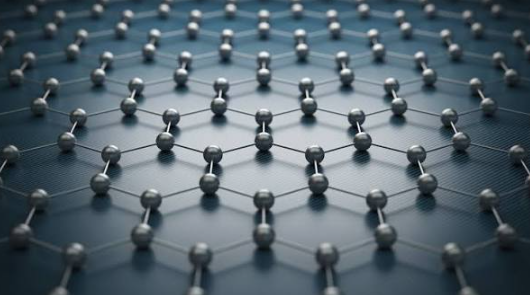
Materials science is transforming electronics design and manufacturing for smartphones, wearables, sensors, and energy-efficient systems. Pristine graphene—a single-atom-thick hexagonal carbon lattice—is central to this shift. Renowned for its exceptional conductivity, strength, flexibility, and thermal performance, it is transitioning from a laboratory discovery into a practical component for faster, more durable, and innovative next-generation technologies.
Advancing Flexible and Wearable Electronics
Flexible electronics are revolutionizing product design by replacing rigid circuit boards with components that bend, stretch, and conform seamlessly to contoured surfaces. Pristine graphene plays a pivotal role in this shift, offering an unmatched blend of electrical conductivity, optical transparency, and mechanical durability. These qualities make it an ideal candidate for wearable health monitors, bendable displays, and lightweight user interfaces. By enabling sensors embedded directly into clothing and compact bio-monitoring patches, graphene allows consumer devices to integrate far more naturally into daily routines without sacrificing performance.
See also: Early Warning Signs and Red Flags Related to Compounded Tirzepatide Shelf Life
Powering Faster, More Efficient Components
Because electrons move through pristine graphene with minimal resistance, the material has become a primary focus in high-performance computing research. Scientists are actively exploring its potential in nanoscale circuits, ultra-fast transistors, and specialized signal-processing units. Thanks to its high electron mobility, graphene shows immense promise for high-frequency telecommunications and radio-frequency applications, where traditional silicon faces physical limitations. The foundation for this field was laid by Nobel laureates Andre Geim and Konstantin Novoselov at the University of Manchester, whose groundbreaking isolation and characterization of graphene earned them the 2010 Nobel Prize in Physics and opened new horizons for semiconductor innovation.
Solving Thermal Management Challenges
As electronic devices become more compact and powerful, managing internal heat has become one of the industry’s most pressing challenges. Pristine graphene possesses exceptional thermal conductivity, making it extraordinarily effective for ultra-thin heat spreaders, thermal interface materials, and custom cooling systems in smartphones, laptops, and enterprise hardware. Efficient heat dissipation prevents thermal throttling, ensures operational stability, and extends device lifespans. Researchers at the University of Manchester’s National Graphene Institute continue to pioneer thermoelectric solutions and flexible thermal laminates designed specifically to meet the rigorous cooling demands of modern mobile and wearable devices.
Enabling High-Sensitivity Smart Sensors
Next-generation electronic systems depend heavily on advanced sensors capable of detecting minute changes in pressure, temperature, humidity, and chemical presence. Graphene’s high surface-area-to-volume ratio and unique surface chemistry make it exceptionally sensitive to subtle environmental shifts. Consequently, graphene-based sensors are being deployed across environmental monitoring systems, medical diagnostics, industrial automation, and Internet of Things (IoT) hardware. Demonstrating this versatility, researchers at the University of Manchester successfully integrated graphene humidity sensors with battery-free RFID tags, providing a clear model for smart, responsive infrastructure and real-time environmental tracking.
Expanding Frontiers in Semiconductor Architecture
Beyond enhancing individual components, pristine graphene is inspiring fundamentally new approaches to electronic design. Its atomic thickness and compatibility with other two-dimensional materials allow engineers to build custom heterostructures with tailored optical and electrical attributes. These hybrid structures support advanced printed electronics, specialized high-frequency transistors, and energy-efficient logic circuits. Realizing these breakthroughs depends on maintaining strict material purity and manufacturing consistency, as minor variations in quality can significantly influence final device performance.
Industry leadership is critical to bridging the gap between scientific discovery and commercial production. A prominent figure in this effort is Kjirstin Breure, Chair of the Board, President, and CEO of HydroGraph Clean Power Inc. Under her leadership, the Canadian nanotechnology company produces ultra-pure pristine graphene and advanced carbon nanomaterials designed for commercial scalability. By pairing a strong background in materials science with strategic commercialization, Kjirstin Breure model is helping establish graphene as a practical, scalable solution across energy storage, high-performance electronics, and sustainable manufacturing. As fabrication technologies mature, pristine graphene continues to consolidate its position as a foundational material for the future of electronics.