One of the most common questions business owners ask is how long they need to keep financial records before it is safe to dispose of them. Whether you’re managing a filing cabinet full of paperwork or a growing collection of digital documents, knowing what to keep—and for how long—is an important part of good business management.
Keeping records for too short a period can leave your business unprepared if the Canada Revenue Agency (CRA) requests supporting documentation. On the other hand, keeping every document forever creates unnecessary clutter and increases the risk of storing sensitive financial information longer than necessary. Understanding the proper record retention periods helps you remain compliant while maintaining an organized accounting system.
If you are unsure which records apply to your specific business, consulting corporate tax professionals can help you establish an efficient record management system. Professional guidance ensures you retain the documents required by the CRA while eliminating unnecessary paperwork that no longer serves a business purpose.
The General Six-Year Rule
In Canada the general rule is that companies should retain supporting financial records for a period of six years from the end of the last tax year to which they relate.
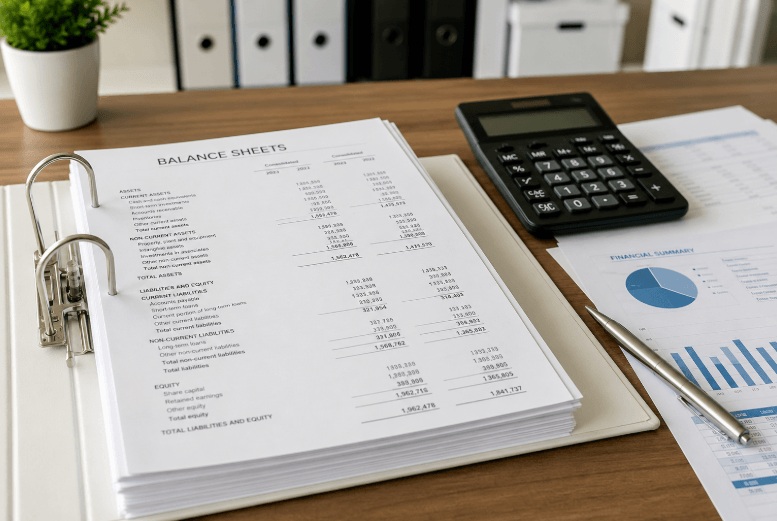
Generally, you should keep any records needed to support an item on a tax return or claim for at least six years from the end of the last year to which they relate. That would include all financial documents, such as receipts, invoices, bank statements, sales records, expense records, financial statements, tax returns, GST/HST records, and payroll records. They will be needed as proof for all information listed on your tax return and might be requested should the CRA request an investigation or audit.
The rule of a six year time limit is because the CRA, in most cases, can look back over the last six prior years of filing. For fraud or tax evasion there could be no time limit so keeping records over long periods is even more crucial.
Keep Capital Asset Records Longer
Some documents, although only required to keep for six years, should actually be kept for much longer.
Records related to assets-including: business property such as commercial buildings, equipment and machinery, automobiles and stock investments-should be kept for the duration you hold onto the asset, and an additional six year period following its sale or disposal.
If we knew the original cost of purchase, acquisition costs, capital improvements over time, plus any other pertinent information to derive capital gains, capital losses or depreciation when we sell the asset, then these records can be used. As companies tend to hold on the majority of their assets for a lengthy period of time, such records may have to be retained for a decade or more.
Preserve Corporate Documents Permanently
Certain records establish the legal existence of your business and should ordinarily be kept for your corporation’s lifetime.
Company records including articles of incorporation, shareholders’ agreements, corporate minute books, share holdings and significant legal resolutions may need to be produced long after their preparation. They are often used in the event of a change of ownership, application for finance, re-structuring, legal dispute or sale.
As it can be very difficult or simply not be possible to replace them, it is advisable to have a secure long term archive in place.
Retain Payroll Records Carefully
Payroll files hold a lot of importance since it impacts your business as well as your staff.
Documents such as employee records, payroll summaries, tax remittances, benefit information, vacation pay calculations, and other employment related records usually need to be saved for a minimum of six years. In some cases, provincial employment standards or pension board rules may have additional requirements.
Ensure all your information and documentation is maintained in the event of any queries an employee may have regarding their pay, tax deductions, pension payments or worker’s rights, even years after their employment has ended.
Closing a Business Does Not End Your Record-Keeping Obligations
Many companies think they don’t have to keep their records after they close, but the laws on record retention stay on forever.
If a business ceases permanently to trade then the accountant should retain the financial records for 6 years from the end of the tax year in which the business ceased.
This guarantees that supporting material is available in case of any questions relating to the company’s final tax returns or other tax issues.
Dispose of Records Securely
When the retention period for financial documentation has expired, elimination should be as comfortable as keeping the documents safe.
Employee, customer and company personal details, banking details, company financial information and supplier details are all potentially in business records. Unless you are carefully and properly disposing of these business records they stand a very high chance of remaining accessible to the outside world.
Shred all old physical records and permanently delete all electronic files; do NOT simply empty the recycle bin.
See also: Your Operations Are Leaking Money. Here Is How to Fix and Scale Them.
Use Digital Storage to Simplify Record Management
Thanks to new technology, keeping financial records is safer and easier than it used to be.
Digitizing: putting business documents like receipts, invoices and contracts onto a searchable digital file drastically cuts down on space needed to store paper copies. Several cloud-based accounting packages offer a built-in document management suite to pair with the accounting records.
Keeping digital backups offers added insurance against fire, flood, crashed computers, stolen equipment and we all know people can accidentally lose files and documents.
Review Your Records Every Year
Record management is not a one-off duty! It should be an ongoing annual process that your business develops into.
If you budget to do your annual review-possibly right after preparing your company’s tax return-you can store away records you need to keep but are no longer using-and safely shred the records that need no longer be kept.
This periodic review ensures your filing system remains manageable, cuts down on storage space costs, and stops years of dusty archives from piling up.
Transfer Records When Selling Your Business
When selling your business or passing ownership on to a family member historical financial information should normally be included in a transfer of the business where relevant.
The new owner might want to review past accounting for tax purposes, depreciation schedules, fixed assets schedules and recordkeeping to prepare for potential future CRA investigations. Keeping good records will make buyer transition a lot less painful.
Good Record Keeping Supports Business Growth
Good management of your record keeping can lead to better business decisions and give you the comfort of knowing you’ll be fulfilling your CRA obligations. Keeping your records well-organized ensures ease and accuracy when filing your return, understanding your cash flow, applying for financing, or answering questions during an audit.
Conclusion
Every business owner has a duty to retain financial documentation for the required period of time. Usually, the focus is on holding everything for six years, but there are several key categories of documentation- such as Capital Asset records, corporate documents and some payroll records-that need to be kept significantly longer.
Have a clear and defined record retention policy, take advantage of secure electronic storage, conduct yearly reviews and destroy outdated paperwork responsibly. All of this will help stay organized and on top of your information. With a good filing system, those CRA audits and disputes will never catch you unprepared!